
Corstorphine lay on the main East-West route for the Romans and was close to Cramond Roman Fort a major harbour and resupply route. Cramond Fort was built around 142 AD when the Antonine Wall was built and used again in 208 AD when Septimus Severus invaded Scotland with his sons Caracalla and Geta.
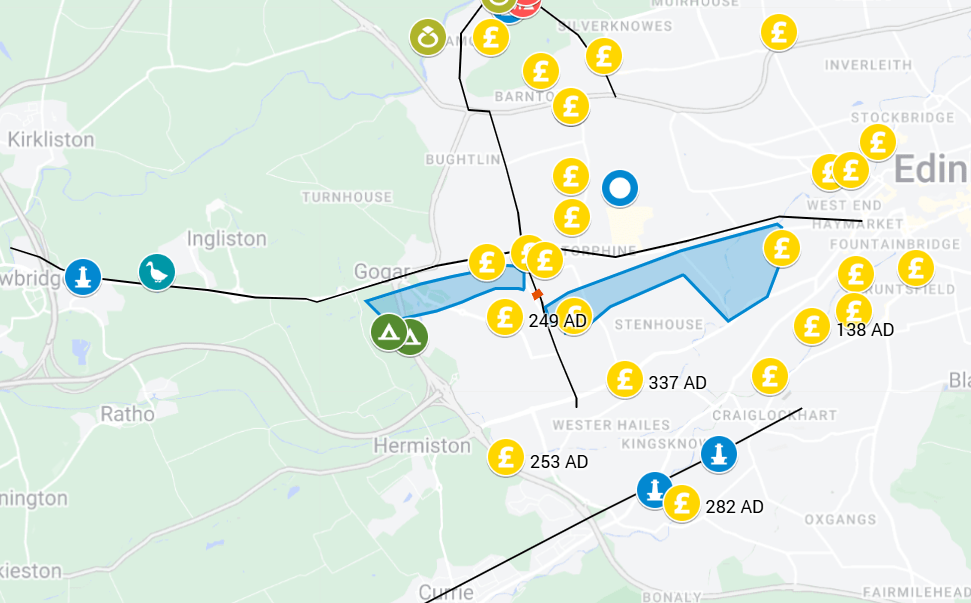
In Corstorphine, we know that the German tribe the Cugerni built St Johns Road and Glasgow Road around 142 AD because they left a milestone saying that. The Cugerni came from the conquered German town of Xantan on the Rhine. It was common practice for the Romans to demand a levy of troops from conquered lands. These troops would then serve hundreds of miles away to stop desertion and mutiny. British tribes conquered by the Romans served on the Rhine.
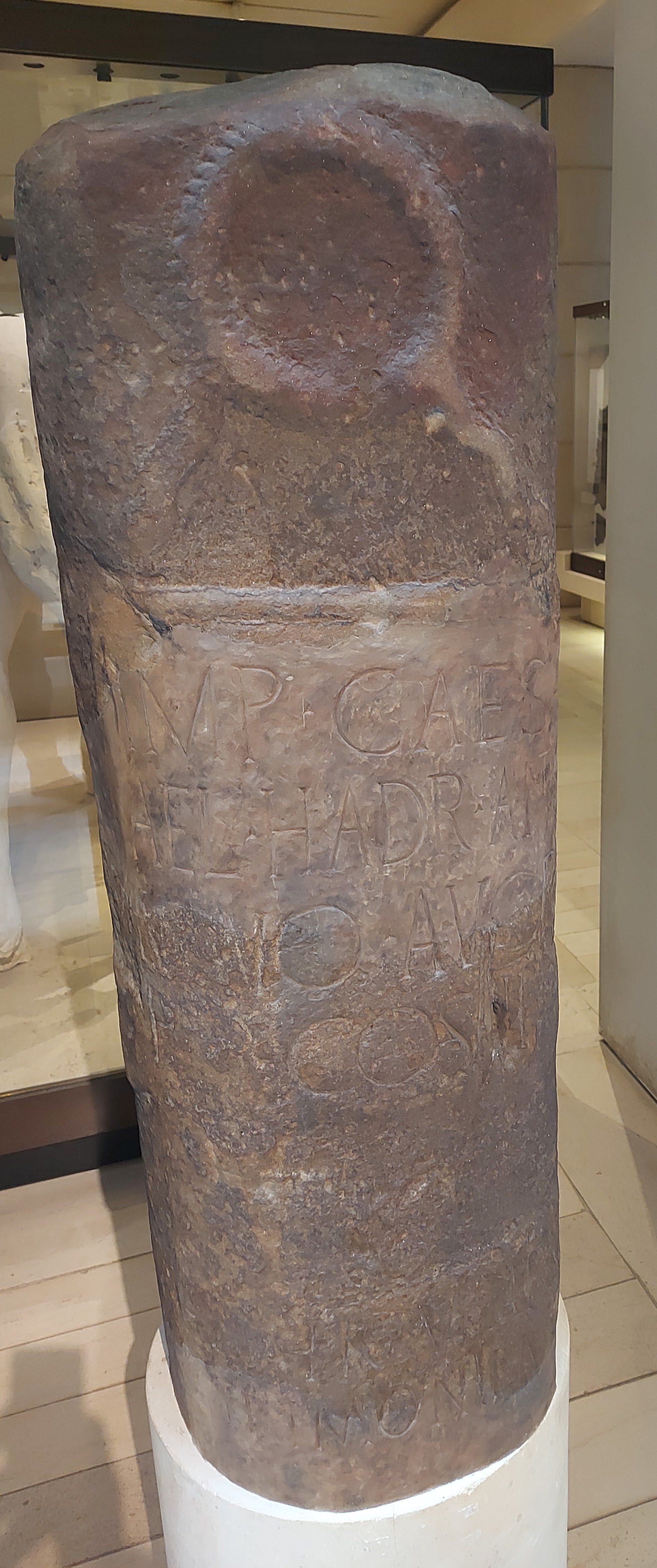
The inscription reads “For the Emperor Caesar Titus Aelius Hadrianus Augustus Antoninus Augustus Pius, father of his country, thrice consul, … the First Cohort of Cugerni (set this up). From Trimontium … miles.”
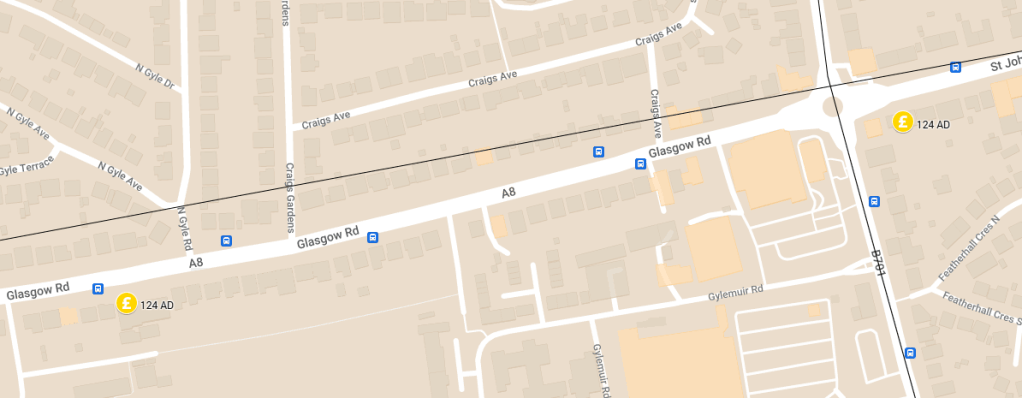
Along St Johns Road two coins of the same period were found, one in front of St Thomas’s church and the other at the Drumbrae roundabout.
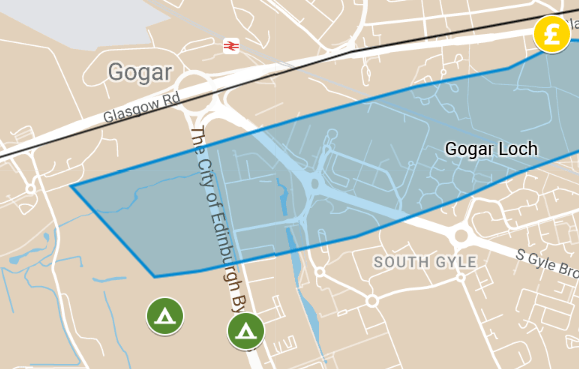
Two Roman temporary camps were established near Edinburgh Park and found in 1982. Roman fragments appeared to confirm they were Roman in nature.
 Roman Corstorphine