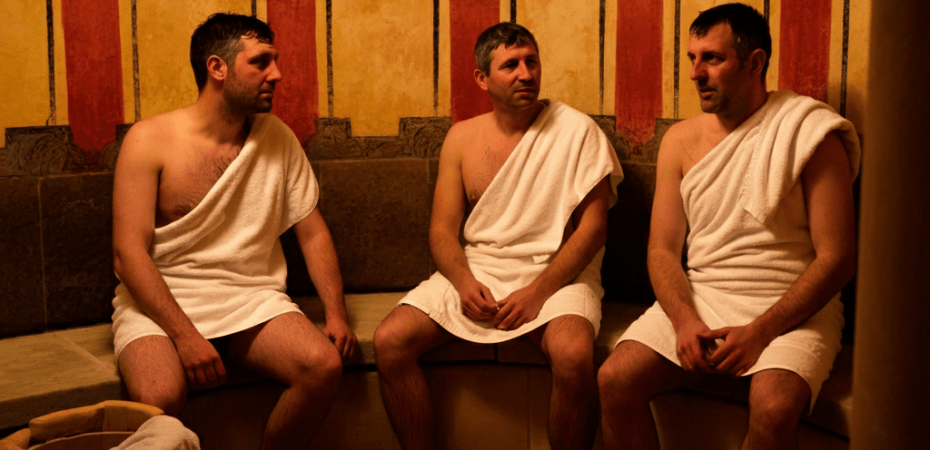
Romans introduced many innovations to Scotland and many forts had a bathhouse attached. Cramond Fort had a large bathhouse attached and soldiers passing through Corstorphine would have used it.
A Roman bathhouse, or thermae, was a complex of public buildings that served as a social and recreational centre in Roman cities. These bathhouses were grand structures, often elaborately decorated with mosaics, frescoes, and marble, and designed to accommodate large numbers of people. In Scotland, all the bathhouses were attached to forts and therefore less elaborate.

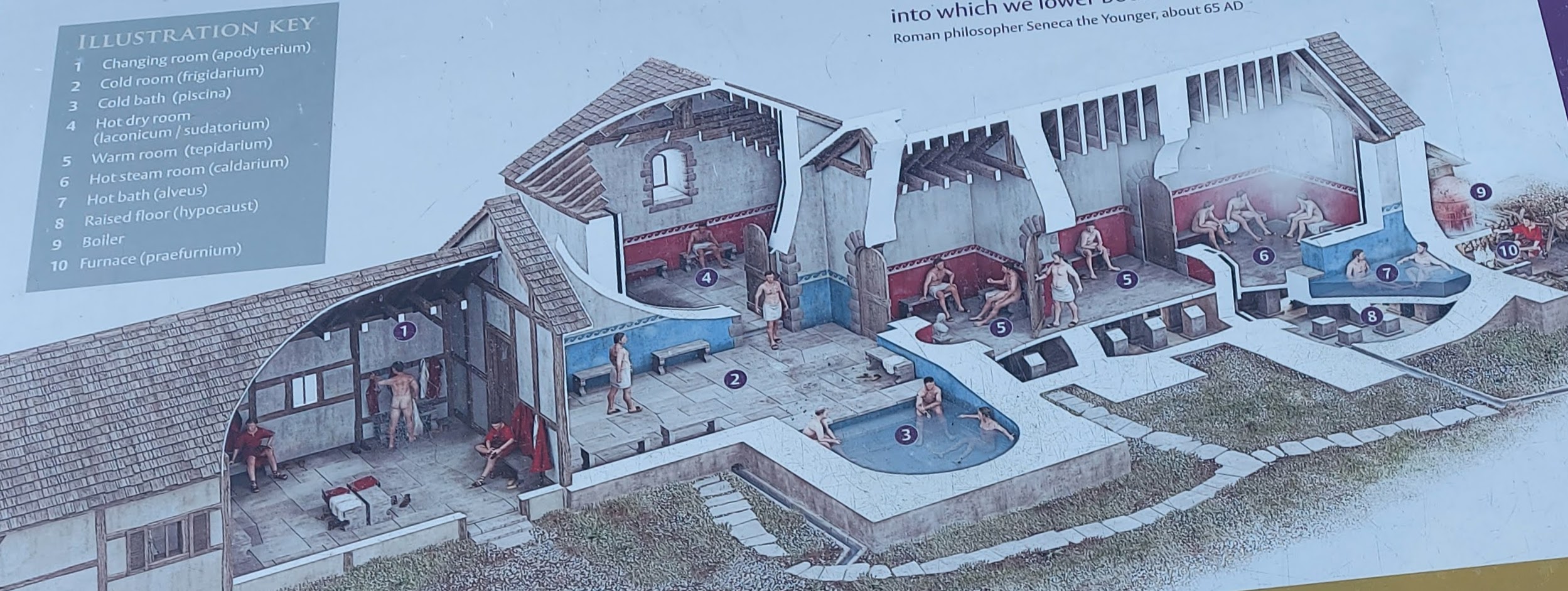
Key Features of Bearsden Bath House, Glasgow
1. Apodyterium (Changing Room):
- The entrance to the bathhouse typically led to the apodyterium, where visitors would undress and store their belongings in niches or shelves. Slaves or attendants might assist with guarding belongings.
2. Frigidarium (Cold Room):
- The next stop for bathers was often the frigidarium, a large, cool room featuring a cold plunge pool (3). The room was designed to refresh the body after exercise or as the final step after bathing.

5. Tepidarium (Warm Room):
- The tepidarium was a warm room, heated by the hypocaust system (a form of underfloor heating). This room served as a transition between the cold and hot areas, allowing bathers to gradually adjust their body temperature. It was often the most elaborately decorated space, with warm, mild temperatures and shallow baths.

6. Caldarium (Hot Room):
- The caldarium was the hottest room in the bathhouse, featuring a hot plunge bath (7) and a heated floor. The air was hot and steamy, and bathers would often sweat here before scraping their skin with a strigil to remove dirt and oil.
Laconicum (Dry Sauna):
- Some bathhouses included a laconicum, a dry, superheated room similar to a modern sauna, where bathers could sweat out impurities.
Architecture and Decoration
- Hypocaust System: The baths were heated by an ingenious system where hot air and smoke from a furnace circulated beneath the floors and through hollow walls, warming the rooms above.


- Decorative Elements: Bathhouses were adorned with intricate mosaics depicting mythological scenes, geometric patterns, and aquatic themes. Walls might be covered in frescoes, and marble statues and columns added to the grandeur.
- Water Supply: Aqueducts supplied the bathhouses with fresh water, which was stored in large cisterns and heated in massive boilers before being funnelled into the various pools and baths. Two aqueducts discovered in Scotland are at Musselburgh and Carpow.
 Roman Corstorphine