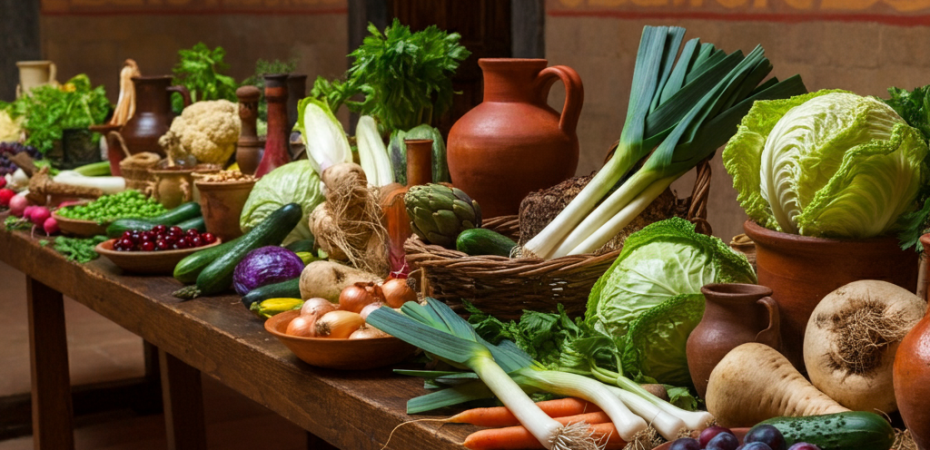
The Romans brought many foods to Scotland importing wine, olive oil and garum, a fish paste. We know what they ate as we find remains in forts and Roman toilets.
Fruits

- Apples – improved cultivation and varieties.
- Cherries – introduced from the Mediterranean.
- Plums – including damsons.
- Peaches – though not common, they were cultivated in gardens.
- Pears – introduced and widely cultivated.
- Mulberries – primarily used in gardens.
Vegetables

- Leeks – became a staple vegetable.
- Onions – used in various dishes.
- Garlic – a key ingredient in Roman cooking.
- Cabbage – introduced and widely grown.
- Celery – used in cooking.
- Turnips – grown for their roots.
- Radishes – often eaten raw.
- Carrots – the Romans grew a purple variety.
- Asparagus – highly valued and cultivated in gardens.
- Lettuce – used in salads.
Herbs and Spices

- Coriander – used to flavour food.
- Mint – introduced for cooking and medicinal use.
- Fennel – for seasoning.
- Bay leaves – used in cooking.
- Thyme – for flavouring dishes.
- Parsley – widely used in Roman cuisine.
- Rosemary – another herb introduced to Britain.
Grains and Pulses

- Wheat – replaced barley as the dominant grain for making bread.
- Spelt – a type of wheat used in bread and porridge.
- Millet – used in porridges and soups.
- Lentils – widely consumed in soups and stews.
- Chickpeas – introduced and used in dishes like puls (a Roman porridge).
- Broad beans – another important legume.
Nuts

- Walnuts – introduced to Britain by the Romans.
- Chestnuts – brought for consumption and cultivation.
- Almonds – used in Roman cooking, especially in desserts.
Meats
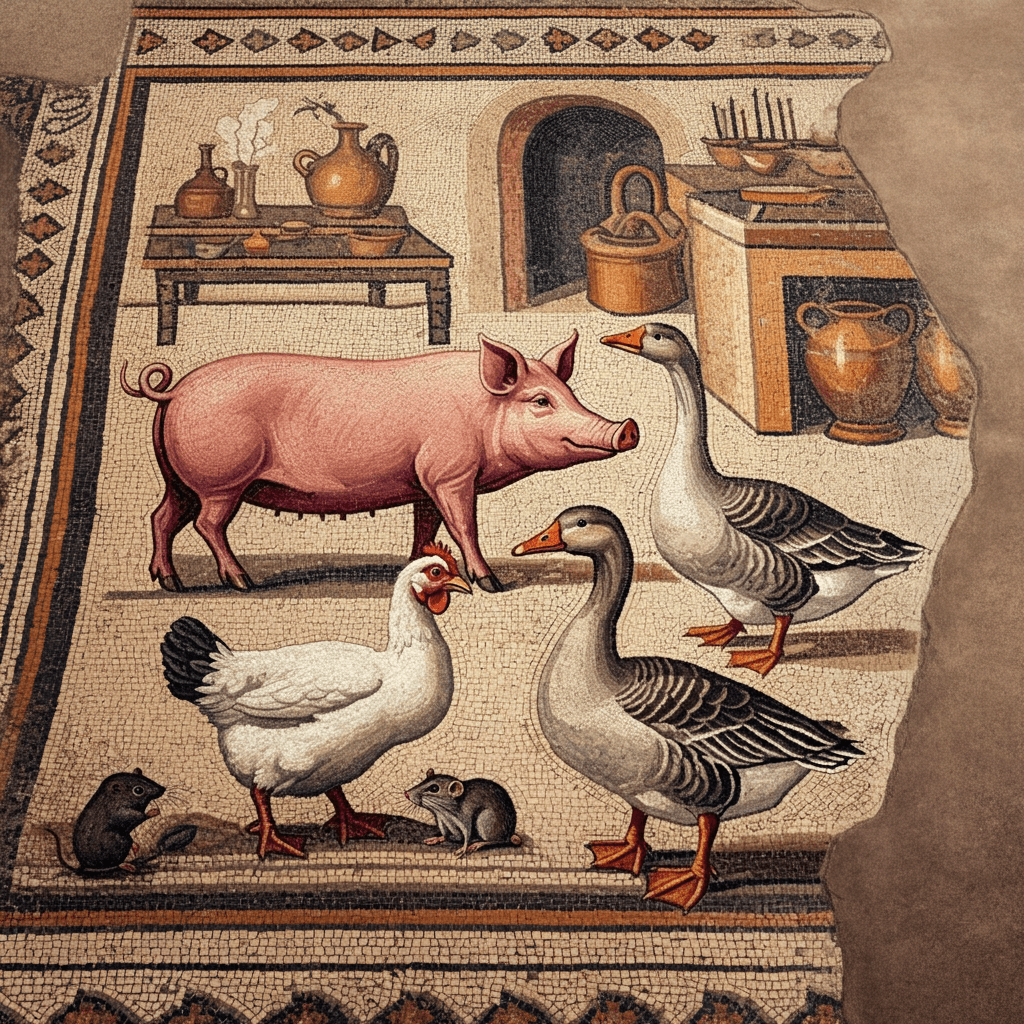
- Pork – the Romans introduced new techniques for breeding pigs.
- Chicken – while chickens existed before, Romans popularized them for meat and eggs.
- Ducks and Geese – introduced for meat and eggs.
- Dormice – a delicacy in Roman cuisine.
- Hare – reintroduced, though rabbits were not introduced until later (by the Normans).
Seafood
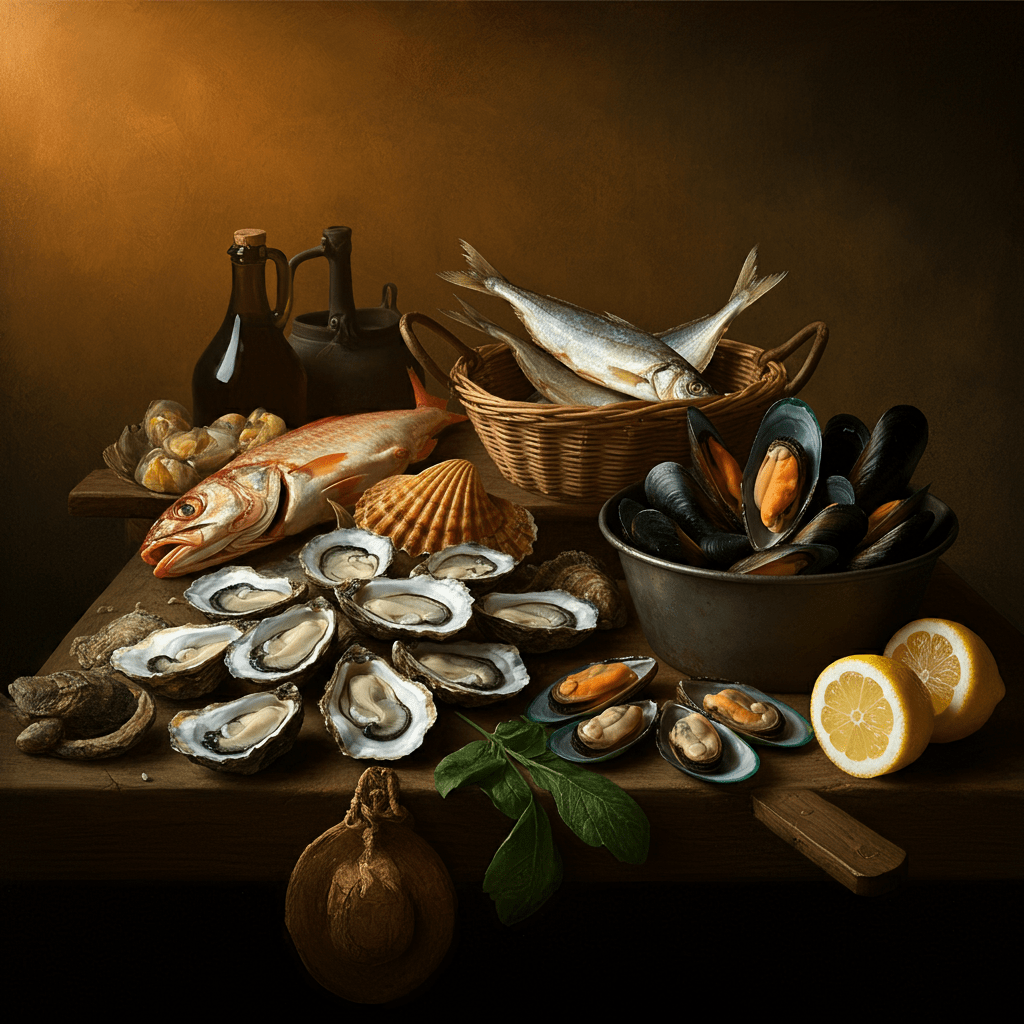
- Oysters – farmed in Britain but prized by Romans.
- Fish – fresh and preserved, including salted fish and garum (fish sauce).
- Mussels and other shellfish – are consumed regularly.
Dairy
- Cheese – Romans introduced new cheese-making techniques.
- Goat’s milk – used in dairy production.
Wine
- Though grapes were grown, much of the wine was imported from the Mediterranean due to the climate challenges in Britain.
Olives and Olive Oil
- While olives couldn’t be grown in Britain, olive oil became a key import for cooking and seasoning.
Other
- Honey – while already used in Britain, the Romans introduced new beekeeping methods.
- Vinegar – for cooking and preserving foods.
 Roman Corstorphine